Japan has this way of making empty space feel alive. Even in photos or sketches, there’s this quiet order — every line, shadow, and opening feels like it’s been placed with care. The more I study its architecture, the more I’m amazed by how it holds on to tradition while pushing forward into the new. It’s not minimalism just to look clean; it’s a way of designing that feels like it’s listening as much as it’s speaking.
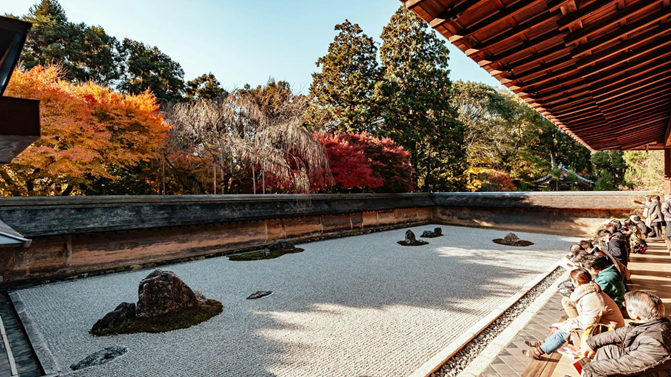
Ryoan-ji’s Rock Garden
1. From Wooden Temples to Raw Concrete
Japan’s earliest architecture, the kind you see in Shinto shrines and Zen temples, feels deeply spiritual. Built from wood, paper, and stone, these structures don’t just sit in nature; they blend into it, almost disappearing. There’s something powerful about that kind of humility, that a building should belong to its surroundings instead of trying to rule over them.er them.
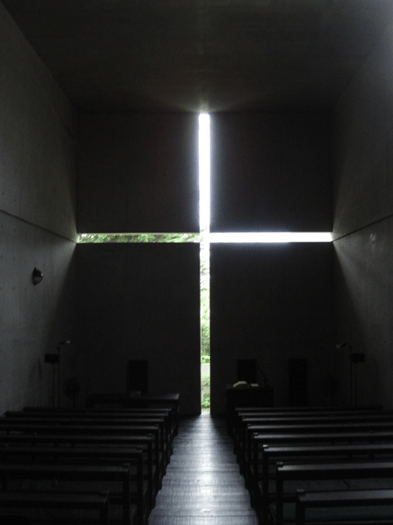
Tadao Ando’s Church of the Light
Then modernism arrived. And instead of erasing tradition, architects like Tadao Ando carried it forward in a different material. His exposed concrete walls aren’t turning away from the past, they’re speaking the same language, only in a new accent. The stillness, the silence, the play of natural light, it’s all still there, only translated into something modern.
That shift is what really pulls me in. The look changed, but the feeling stayed.
2. Symbolism That Still Stays With Us
Japanese architecture finds meaning in the smallest details — the slope of a roof, the rhythm of tatami mats, the way a single stone sits in a garden. Those details have shifted with time, but they’ve never disappeared.
Even in a modern Tokyo apartment, you can still catch glimpses of the past — a floor plan that follows the old tatami grid, furniture with the clean lines of traditional rooms, or a small corner set aside for tea or quiet. The values behind it, simplicity, modesty, an awareness that nothing lasts forever, still shape the way space is made.
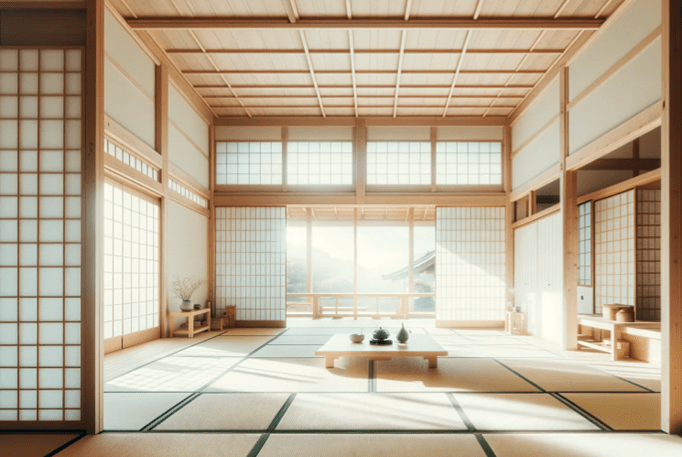
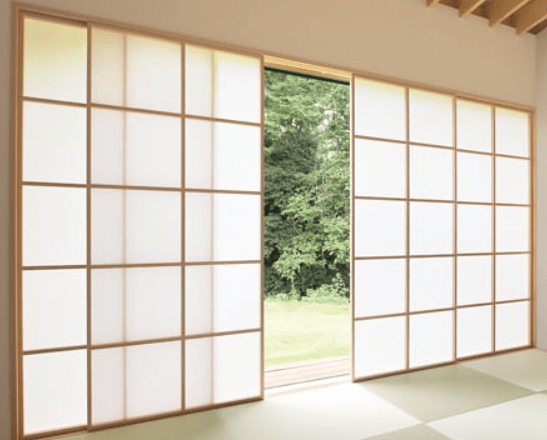
Shoji Screens & Tatami Room (interior)
3. The Power of What’s Not There — Then and Now
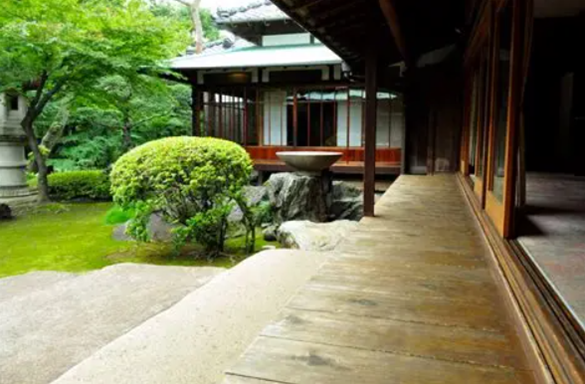
Engawa (veranda with sliding doors)
What amazes me is how Japan has always embraced the idea of negative space. In older structures, this showed up in the open courtyards, the empty rooms, the filtered light. In today’s architecture, it appears in the glass walls of SANAA’s museums or the voids in Ando’s concrete churches.
What’s not there matters just as much as what is. That idea hasn’t changed, it’s only become more refined
And maybe that’s the message: evolution doesn’t have to mean disruption. It can mean deepening.
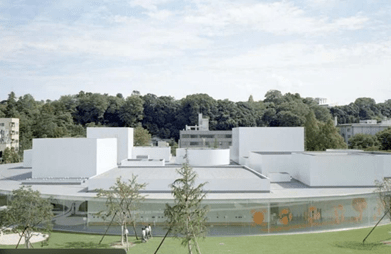
SANAA’s Minimalist Museum
Collage Moment – A Visual Pause
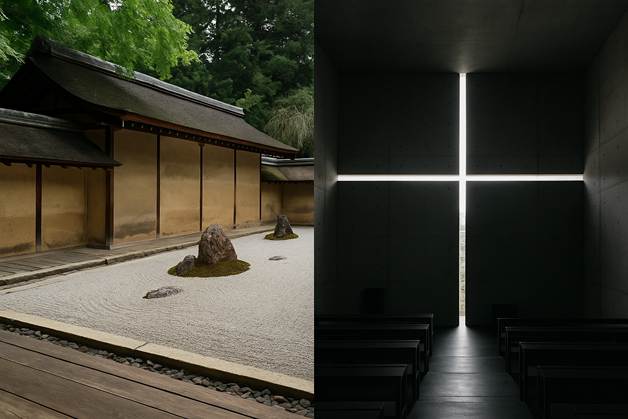
Then: silence in stone and wood at Ryoan‑ji.
Now: light through concrete at Ando’s Church.
Different forms. Same spirit.
This side-by-side captures everything I’ve been trying to say: the soul of Japanese architecture is still alive, even if its skin has changed.
We often talk about innovation, but do we pause to ask: What are we preserving?
In the rush to make something new, are we losing the quiet wisdom of what came before?
And if a building can make us feel still, silent, and at peace, is that not just as powerful as something bold and iconic?
 Architecture Is Red
Leave a comment