There’s something about Italian architecture that messes with my brain.
It doesn’t just exist — it evolves. Quietly. Like it knows it’s already iconic, so it doesn’t need to prove anything.
Italy never deletes its past; it just layers over it like a stubborn perfectionist who refuses to start a new file.
And somehow, it works.
From Power to Precision: The Roman Blueprint
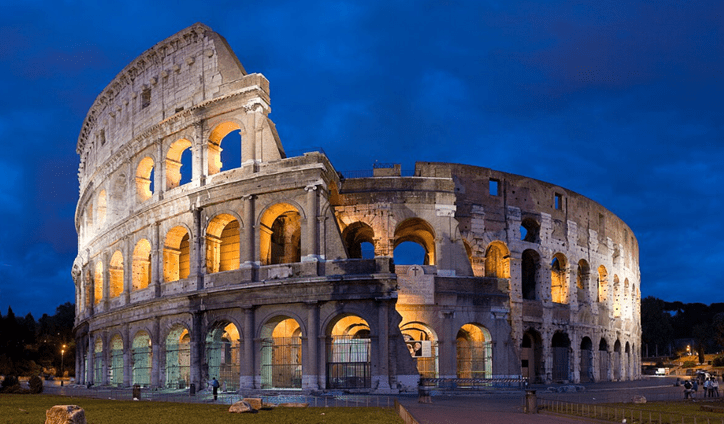
Colosseum, Rome
Rome wasn’t subtle. It built things that screamed, “Look at me, I conquered you.”
Domes, arches, concrete were all power moves.
But here’s what I didn’t expect: that obsession with precision never died.
You still feel it in Renaissance courtyards that click like geometry puzzles and in streets that somehow make chaos look organized.
Two thousand years later, the Roman need for control is still winning. Wild.
The Renaissance: When Buildings Got Deep
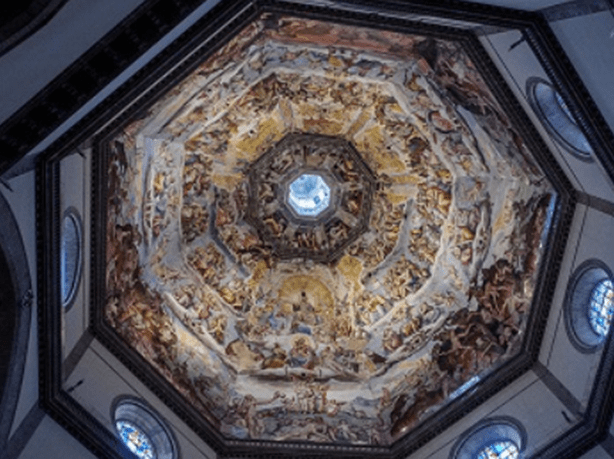
Interior of Brunelleschi’s Dome, Florence
Then suddenly, Italy went from “we build empires” to “we build ideas.”
The Renaissance was when architecture started overthinking, in the best way.
Brunelleschi’s dome wasn’t just a flex in engineering; it was a thought experiment in brick.
Proportions, light, clarity — everything meant something.
And I swear, I can’t walk into one of those spaces without feeling like I’m failing an unspoken philosophy test.
Baroque: The Era of Drama (and Zero Chill)

Interior of Sant’Agnese in Agone, Rome
Baroque showed up like, “Subtlety? Never heard of her.”
Columns twist, ceilings explode, angels fly out of corners — it’s chaos, but expensive.
And somehow, it still feels balanced.
How did they pull that off? I think about that way too often. Like, who looked at a wall and said, “You know what this needs? Twenty-seven statues and some clouds.”
I used to think Baroque was too much. Now I think everything else is not enough.
Modernism: The Plot Twist I Didn’t See Coming

Brion Cemetery, Carlo Scarpa
Modernism usually feels cold to me, like concrete that forgot how to care.
But then there’s Carlo Scarpa.
He somehow made minimalism emotional.
Every joint, every cut, every tiny piece of detail looks like it’s remembering something.
Scarpa didn’t erase history; he translated it. And I can’t believe that’s even possible.
Still thinking about that one. Still can’t sleep.
Closing Thought
Italy didn’t teach me how to build.
It taught me how to remember while building.
Because apparently, you can mix ruins, marble, and concrete — and instead of a mess, you get a masterpiece.
Honestly? I still don’t know how they do it.
 Architecture Is Red
Leave a comment